Article written by Jan Green
There’s been a whole lot of wrapping going on recently. Tis the season, or it was the season. Gifts carefully wrapped and topped with a bow were placed under the Christmas tree. That season is now behind us, but we’re still wrapping. This time we find ourselves wrapping up the year as we head into 2026.
Many people think that once the last of the produce is harvested and weighed, the gardeners and volunteers at the community garden go home and rest until spring arrives and new crops are planted for the next year. That could not be farther from the truth. This is actually one of the busiest times for us at the community garden. After frost hit in the fall, and the warm season crops came to an end, preparation for the next year immediately began. Plants from 35 or more garden beds needed to be removed and taken to compost bins or trashed. Next, the cages and trellises were rounded up and stored away. I’ve never actually made a count, but figuring the number of tomato and pepper plants we had growing, I figure it was over 100 cages, 14 cattle panels, and eight half panels. Then the real workout began. Wheelbarrow after wheelbarrow of compost was hauled to each bed. This was topped with leaves that had been shredded. Most beds also received a treatment of shrimp meal to help control root knot nematode that we have been working to control for the last several years. All this was then turned into the soil. Finally, elbon or cereal rye was planted as a cover crop and covered lightly with straw. Three strawberry beds received compost and a light covering of straw after new plants were transplanted into them. Our goal was to complete these tasks by Thanksgiving so that December could be mostly a time to relax and celebrate with friends and family. We did a pretty good job of that, too. A new enclosure to hold leaves was constructed using cattle panels after Thanksgiving, and finally it was time for a little break from the garden.
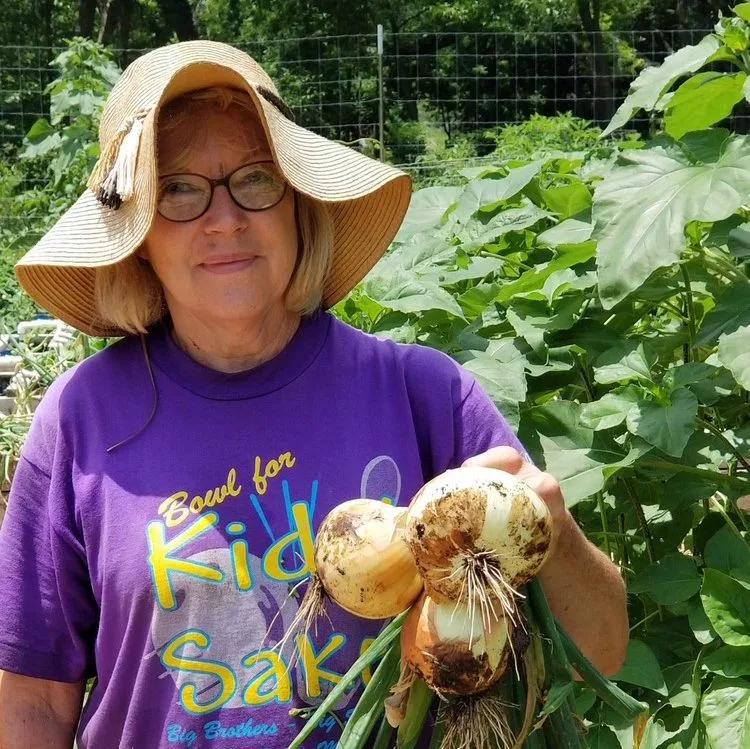
Now we look forward to January, and for the most part, garden beds are ready for the new growing season. We are excited to start planting onions the first of January, one of our largest and favorite crops. A few bundles of onion starts have already been purchased and are waiting to find their place in the ground.o Somewhere between 1500 to 2000 onions will go into the ground this month. Weeding, watering, and a bit of fertilizing will be required before May when they are ready to harvest. Typically they have been a fairly easy crop to grow and very rewarding.
Once planting is completed, there will be more organizing to do in the garden, weeds to pull in the strawberries and onions, seed catalogs to scour, and seeds to order for the upcoming growing season. We have our favorites after several years of trying various varieties of plants. Big Guy jalapeño hasn’t disappointed us yet. Big Bertha is a favorite bell pepper, but we have lots more to try. Early Girl Bush tomato was a winner last year and Purple Boy tomato is always a favorite due to its flavor that is reminiscent of an heirloom. Several types of okra have been tried, but so far we keep coming back to Clemson Spineless.
Cucumbers and squash are a different story. No clear winner there. We’ve had great success with Armenian cucumbers- until this year when cucumber beetles spread bacterial wilt, eventually killing the plants. We also tried a few more varieties like Suyo Long, which didn’t disappoint, but cucumber beetles did a number on them as well. We hope to keep those pests under control more this year but will also plant County Fair which resists bacterial wilt that ends up killing the plants. Obviously, if we can keep the plants from dying, we’ll be much more successful.
Then there’s the squash, always a challenge for us. We’ve tried about every organic means to control those nasty pests that put an end to this crop just as it starts to produce. In 2026 we will not be planting any yellow squash or zucchini since those are easily killed by vine borers and squash bugs. We will try focusing on yet another strategy in this war which we clearly have not been winning. We will grow only muschata types of squash which are supposedly much more resistant to these pests and can be eaten like zucchini if desired. Last year we were pleased with luffa and Tromboncino squash and will be adding cucuzza and Seminole to see how they do as well. We are determined to have squash to harvest in this garden. It may not look like that grocery store squash but can be a very good substitute, especially if harvested early. Hopefully this, along with our other strategies will help in our fight since we’re running out of options. Time will tell.
We’re praying for a good orchard harvest this year if we can get old man winter’s cooperation. He quietly and quickly snuck into the garden and took our plums this year. That’s all it took. One cold night and they were gone. But, on the other hand, we do need enough cold nights to meet the chilling hour requirement for the peaches to grow and produce properly or maybe even at all.
Too hot, too cold, too wet, too dry, too many bugs, too much wind, too much sun. This list could go on and on and on. Somehow there’s satisfaction in overcoming the odds and being able to pick that fresh produce out of your own garden. Come join us as we learn and work to overcome the challenges whether it be in your own garden bed or as a volunteer growing food to help feed those in need. So, as we wrap up this report, the adventure is about to begin in the garden for yet another year. Don’t miss out on what’s ahead.