Article written by Jake Lehrer
The Texas Department of State Health Services has passed many new regulations to the consumable hemp business. The new regulations took place on March 31st, with manufacturers and retailers worried about the future of consumable hemp products in the state of Texas.
The new regulations apply to packaging and labeling, testing, bookkeeping, licensing fees, and more. While there are multiple regulations that are going to affect the Texas hemp business, there are two very important new rules.
When people talk about getting high, they are usually referring to a compound that is in both hemp and marijuana called Delta-9-THC (tetrahydrocannabinol), which is the most psychoactive chemical. Marijuana naturally has a higher Delta-9 THC level, and hemp naturally has a lower level, making hemp usually non-psychoactive.
For the state of Texas, legal hemp must have a Delta-9 THC level of 0.3%, when it is tested. Up until now, legal consumable hemp products had to follow this rule. All Delta-9 THC content in consumable hemp products had to be 0.3% or lower.
However, there was a loophole that Texas regulators have finally closed. There is another compound that is on its own non-psychoactive, that can be found in both hemp and marijuana: THCA (tetrahydrocannabinol acid).
In its dry, raw form, THCA is not psychoactive, so it was never tested to comply with regulations. However, when THCA is heated (smoking, vaping, cooking, etc.), then it goes through a process called decarbonization, turning into THC.
THCA is the precursor to THC. But because on its own it is not psychoactive, it was never tested. So consumable hemp products could get around it. That being said, many consumable hemp products were unofficially containing more THC than what was tested for, all within the confines of Texas law. Now Texas regulators have closed that loophole.
The new regulation in the state of Texas, is that testing will be done to discover ALL THC level’s, including THCA, and they must all combined be at a level of 0.3% or lower.
According to a hemp products website: “The result is that no naturally occurring THCA hemp flower can meet the new Texas standard. Any product with meaningful THCA content is now considered above the legal threshold for hemp and classified as marijuana under Texas law — which remains a Schedule I controlled substance with significant criminal penalties.”
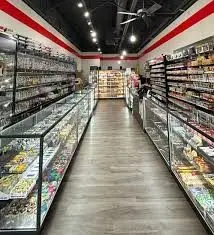
The Texas Tribune reports, “hemp retailers say the regulation that decreases the amount of total THC in products they sell to 0.3% will eliminate popular smokeable hemp products, such as rolled joints and smokeable flower buds, which make up more than 50% of some stores’ inventories.”
According to the new law, the test results for all consumable hemp products will be looking for:
- the concentration and identity of the cannabinoids, including all acids in the plant;
- the presence and quantity of heavy metals, pesticides, microbial contamination, and other substances prescribed by the department;
- the presence and concentration of d-9 THC, total d-9 THC, and total THC;
- a total delta-9 tetrahydrocannabinol concentration of 0.3% or less on a dry weight basis.
That last component is important, since the new rule is stating that the total amount of delta-9 THC sources combined, including the precursor THCA, must be 0.3% or less. This applies to retailers that are selling products from out of state.
Additionally, the next important rule is the new licensing regulations. The new law will require each facility that is a manufacturer, processor, distributor, and/or retailer, to renew their license every year. Each license will only be for one facility or shop. If a person has multiple facilities, then they will have to get a license for each facility. For example, one person that owns a hemp manufacturing facility, and a processing facility, will have to get two licenses, one for each facility. A person that owns several retail stores that sell consumable hemp products, will have to get a license for each store.
The new licensing fees will be more expensive and the license holder must do it for each of their facilities and/or shops they own. The license fee will be $10,000 for each manufacturing and processing facility. Retail facilities will be $5,000 for each location. They must renew their license with those costs every year.
Also, during the valid time a person has their license(s), they must pay a fee of $175 if they make any changes to their facility such as location or a change of name. Also, if a person renews their license after the deadline to do so, they must pay an additional $1000.
Distributors, processors, manufacturers, and retailers will have to submit an application detailing the exact location(s) of where hemp is going to be sold, distributed, processed or manufactured.
Each applicant must inform property owners if they are not the property owner, and get written consent to manufacture, hold, and/or distribute hemp. The license holder must undergo a criminal background check at their expense, including fingerprinting. If convicted of any felony in Texas or any other state related to drugs within the last 10 years of the application, they will be denied an application. Even if the department finds out that a license holder has been convicted of a drug related felony within 10 years, that licence holder will have their license(s) revoked.
Furthermore, the new law will require updating packaging labels and bookkeeping. Product packaging will have to be child resistant.
Labels must include the following specific warnings:
- keep out of reach of children;
- product may contain tetrahydrocannabinol (THC) and can cause a user to fail a drug test;
- all THCs have psychoactive properties;
- pregnant or nursing women should consult a healthcare provider before use;
- this product has not been evaluated by the FDA.
The new regulations will also make license holders have to keep detailed documents such as testing results of the hemp products, licensing documentation from where they receive their hemp products, records of all products and ingredients, their weights and measures, consumer complaints, and more.
The law also makes a point that retailers cannot sell to persons under 21. In the law, retailers need to be looking at IDs that “include a physical description and a photograph that matches the person’s appearance; provide the individual’s date of birth; be issued by a government agency; and is not expired.”
If you would like to read the entire new law in effect since March 31st, click the link here: https://www.dshs.texas.gov/sites/default/files/hemp/pdf/dshs-26-0009-manufacture-distribution-and-retail-sale-of-consumable-hemp-products-attachment-2-rule.pdf