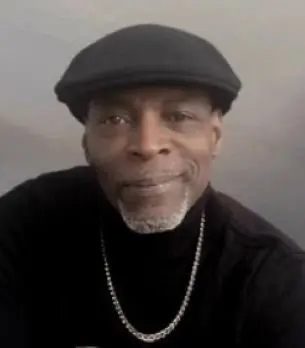
After a decades-long career in telecommunications, James “Bullet” Anderson now invests his time in community and faith.
James Anderson, the second son of James and Sarah Anderson, was born in Brownwood, Texas, and later made San Angelo his home. Affectionately nicknamed “Bullet” by his grandfather, Mr. Virge Anderson, James spent his early years active in athletics—running track at San Angelo Central High School and participating in track and field events during the summer.
James began his telecommunications career in San Angelo with GTE/Verizon before transferring to the DFW Metroplex. Over the course of 27 years with Verizon, he built a strong foundation in network design and now continues to apply his expertise as a contract network designer for a leading telecommunications company.
A proud veteran, James served seven years with the Texas Army National Guard in Irving, Texas. After many years away, he returned to his hometown, where his roots and values continue to guide him. He credits his parents for leaving a lasting legacy of faith and commitment in Brownwood—and he strives every day to continue that legacy.
Deeply engaged in his community, James is a member of the Brownwood Youth Support Group and serves on the board of R.O.C. He is also an active member of Breath of Praise Community Church. In his free time, James enjoys spending time at the bowling alley—either bowling or shooting pool—and often hooks up the RV to meet his brothers for fishing trips. And if there’s a Rodeo nearby, you can be sure to find him there, too.
Known for his professionalism, friendly demeanor, and dedication to service, “Bullet” values faith, connection, and community in all that he does.
Bullets words to Live By: “Our rewards in life will always be in exact proportion to our contribution.” — Earl Nightingale
***
This year marks the 100th Anniversary of Black History Month and Revitalizing Our Community (ROC) will be spotlighting amazing African Americans, who have made contributions to the community of Brownwood and Brown County. Black History Month was created in 1926 in the United States, when historian Carter G. Woodson and the Association for the Study of Negro Life and History (ASNLH) announced the second week of February to be “Negro History Week”. This week was chosen because it coincided with the birthday of Abraham Lincoln on February 12 and that of Frederick Douglass on February 14, both of which Black communities had celebrated since the late 19th century
Black educators and Black United Students at Kent State University first proposed Black History Month in February 1969. The first celebration of Black History Month took place at Kent State a year later, from January 2 to February 28, 1970.
Six years later, Black History Month was being celebrated all across the country in educational institutions, when President Gerald Ford recognized Black History Month in 1976, during the celebration of the United States Bicentennial. He urged Americans to “seize the opportunity to honor the too-often neglected accomplishments of Black Americans in every area of endeavor throughout our history.”