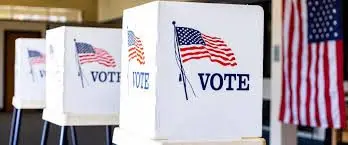
During the first week of November, Texans will be able to return to the ballots to vote on 17 constitutional amendments. Early voting will operate October 20th through the 31st, and polls open on Election Day (Nov. 4th) at 7 a.m. What exactly will be on the ballots? Let’s find out.
WHAT’S ON THE DOCKET
Here is a comprehensive list of the specified 17 amendments:
- New Funds for Texas State Technical College System
- “Permanent Technical Institution Infrastructure Fund” & “Available Workforce Education Fund”
- Intended to provide consistent funding for the following: obtaining land, building construction, repairs, textbooks, obtaining capital equipment for campuses
- Unrealized Capital Gains Tax Ban
- Texas legislature would be prohibited from enforcing a tax on unrealized capital gains of the following: individuals, families, estates and trusts.
- Bail Denied for Certain Offenses
- Suspects charged with the following: murder, capital murder, certain aggravated assault, kidnapping, robbery, sexual assault, indecency with a child, or human trafficking.
- Judges are to be expected to submit a written order of explanation if bail is granted.
- Allocating Sales and Tax Revenue for Texas Water Fund
- The first $1 billion of sales tax revenue each fiscal year will be donated once collections exceed $46.5 billion
- Personal Property Tax Exemptions
- Any owner holding animal feed for retail will be exempt from personal property taxes.
- Taxation
- Occupation tax on “registered securities market operators” will be prohibited; as well as a tax on securities transactions
- Homestead Tax Exemptions
- For the surviving spouse of a veteran who died from a service-related illness will be exempt from homestead tax
- Ban on Certain Taxes
- Taxes on financial assets, transactions or occupations of a certain measure will be banned
- Income-producing Property Tax Exemption
- Income-producing personal property will be exempted from property taxes up to $125,000 of market value
- Home Improvements After Fire Property Tax Exemption
- A temporary tax exemption for improvements made on homes damaged by a fire.
- School District Taxes
- People who are disabled or 65+ years old will be exempt from the homestead tax exemption for school district taxes ranging from $10,000 to $60,000.
- State Commission on Judicial Conduct Changes
- Governor appointees to State Commission on Judicial Conduct will increase from five to seven members. 13 are currently on commission.
- Rules and restrictions for council members and the tribunal will also be added or changed.
- Increasing the Homestead Tax Exemption
- For school district taxes ranging from $100,000 to $140,000 the tax will be exempted
- Dementia Prevention
- Establishes the Dementia Prevention and Research Institute of Texas, and the Dementia Prevention and Research Fund
- Parental Rights
- The Texas Constitution will adopt language for parental rights.
- “The people of Texas affirm that a parent has the responsibility to nurture and protect the parent’s child and the corresponding fundamental right to exercise care, custody, and control of the parent’s child, including the right to make decisions concerning the child’s upbringing.”
- U.S. Citizenship Required to Vote
- Noncitizens prohibited from voting in the state
- Border Security Tax Exemptions
- If property is located along the Mexican border, increases to the property’s value will be exempted
- Added value is a result of construction or installation of border infrastructure.
VOTING GUIDELINES
Texas Policy Research released a guide walking voters through these propositions and offers recommendations for how people should vote. While the source is suggestive, I share this only to offer analysis on the coming ballot. I also reference the condensed analysis published by 89th Texas Legislature. THE FOLLOWING RECOMMENDATIONS ARE NOT MY OWN.
Proposition 1
No. This is established as preferential funding that undermines limited government and transparency.
Yes. TSTC has expanded campuses to meet workforce demand but lacks stable funding sources, limiting its ability to grow. A dedicated endowment would provide the capital needed to expand programs, strengthen the workforce pipeline, and boost Texas’s economic development.
Proposition 2
Yes. Texas doesn’t currently have such a tax so this would be an implemented safety measure to uphold individual liberty, property rights, and free enterprise.
No. “A constitutional prohibition limits the ability of future legislatures to decide whether to impose a capital gains tax during economic circumstances that current legislators cannot foresee.”
Proposition 3
No. Undermines individual liberty despite aiming to increase public safety. It undermines by expanding pretrial detention without conviction and judicial consent is diminished.
Yes. The amendment would allow courts to deny bail for the most serious offenses if the state proves bail cannot ensure court appearances or public safety, addressing concerns that dangerous individuals are sometimes released under current bail practices.
Proposition 4
No. Also undermines limited government and fiscal transparency by pushing out private sector solutions. It also reduces future tax relief opportunities.
Yes. The amendment would create a sustainable funding source to address Texas’s long-term water infrastructure needs, supporting growth, jobs, and economic development.
Proposition 5
Yes. Promotes free enterprise and private property rights. Reduces a targeted tax burden on agricultural retailers.
No. “Exemptions for animal feed would give an unfair tax benefit to feed sellers, as almost all other forms of inventory are subject to property tax.”
Proposition 6
Yes. Affirms limited government, free enterprise and private property rights. Preserves Texas’ pro-business climate without “fiscal downside.”
No. The amendment would mainly benefit the wealthy, worsen Texas’s regressive tax system, and leave working families carrying a heavier property tax burden.
Proposition 7
Yes. Honors the sacrifices of military families, protects individual liberty and property rights.
No. Expanding property tax exemptions for spouses of deceased veterans could shift higher tax burdens onto other taxpayers, particularly in areas with large veteran populations.
Proposition 8
Yes. Reinforces private property rights, personal liberty and limited government. Texans are ensured to be free to transfer wealth without corrective taxes.
No. The amendment is unnecessary since no death tax is being considered, and constitutional changes should be reserved for truly critical issues.
Proposition 9
Yes. Provides targeted relief to small businesses to encourage investment and job creation.
No. Raising the tax exemption would cut local school district revenue, forcing the state to cover the shortfall and reducing funds available for other priorities.
Proposition 10
Yes. Homeowners are ensured that they will not be taxed on homes that no longer exist.
No. “No opposition to the proposed constitutional amendment was expressed during legislative consideration of the proposal.”
Proposition 11
No. Shifts the tax burden to younger Texans, state spending commitments expanded without reform, and “erodes tax equity”.
Yes. The amendment would make housing more affordable for elderly and disabled Texans by raising the homestead exemption, providing visible tax relief without reducing school district funding.
Proposition 12
Yes. Citizen oversight broadened and strengthens the enforcement of judicial ethics.
No. The amendment could politicize the State Commission on Judicial Conduct by giving the governor more appointments and reducing the role of judges in overseeing their peers.
Proposition 13
Yes. Burden shifted to renters, small businesses, and non-exempt property owners. More equitable relief.
No. The amendment would cut revenue for public services, shift the tax burden to renters and businesses, and leave more homeowners paying no school property taxes.
Proposition 14
No. Embedding medical research funding into the constitution expands the scope of government. Bypasses appropriations process and crowds out private innovation in healthcare.
Yes. The amendment would fund dementia research at a critical time, using the state’s budget surplus to attract top talent, create jobs, and advance treatment that could benefit millions.
Proposition 15
Yes. Codifies parental rights and constrains state action.
No. The amendment may inadequately protect children’s rights and could allow the government to condition parental rights on its interpretation of parental responsibilities.
Proposition 16
Yes. Affirms individual liberty and limited government by making citizenship and civic responsibility the threshold for voting. Reinforces electoral integrity and state sovereignty.
No. The amendment is unnecessary since only citizens can already vote, and it could fuel anti-immigrant sentiment, create confusion among voters, and set a precedent for unnecessary constitutional changes.
Proposition 17
Yes. State programs and spending aren’t expanded but relief is still offered to landowners investing in border security.
No. The amendment would shrink the tax base, potentially raise taxes on other property owners, and incentivize more border wall or surveillance construction on private land.
***
Katelyn Sims is a senior at Howard Payne University, pursuing a Bachelor of Arts degree in social science with emphasis in American political studies, global studies and jurisprudence. She is also a student in the university’s Guy D. Newman Honors Academy, as well as a prominent member of the Student Speaker Bureau speech and debate team. Following graduation, Katelyn will pursue a career in the field of U.S. foreign policy.
Katelyn has worked as a news writer and marketing coordinator with Brownwood News since 2023. Her column The Truth Will Set You Free is intended for all people from all walks of life. Katelyn aspires to inform readers of major U.S. political and legislative activity with an unbiased analysis that engages with political ideologies on all sides of the aisle. She believes the public ought to exercise their free will to cultivate personalized opinions on controversial issues without the influence of mainstream media.